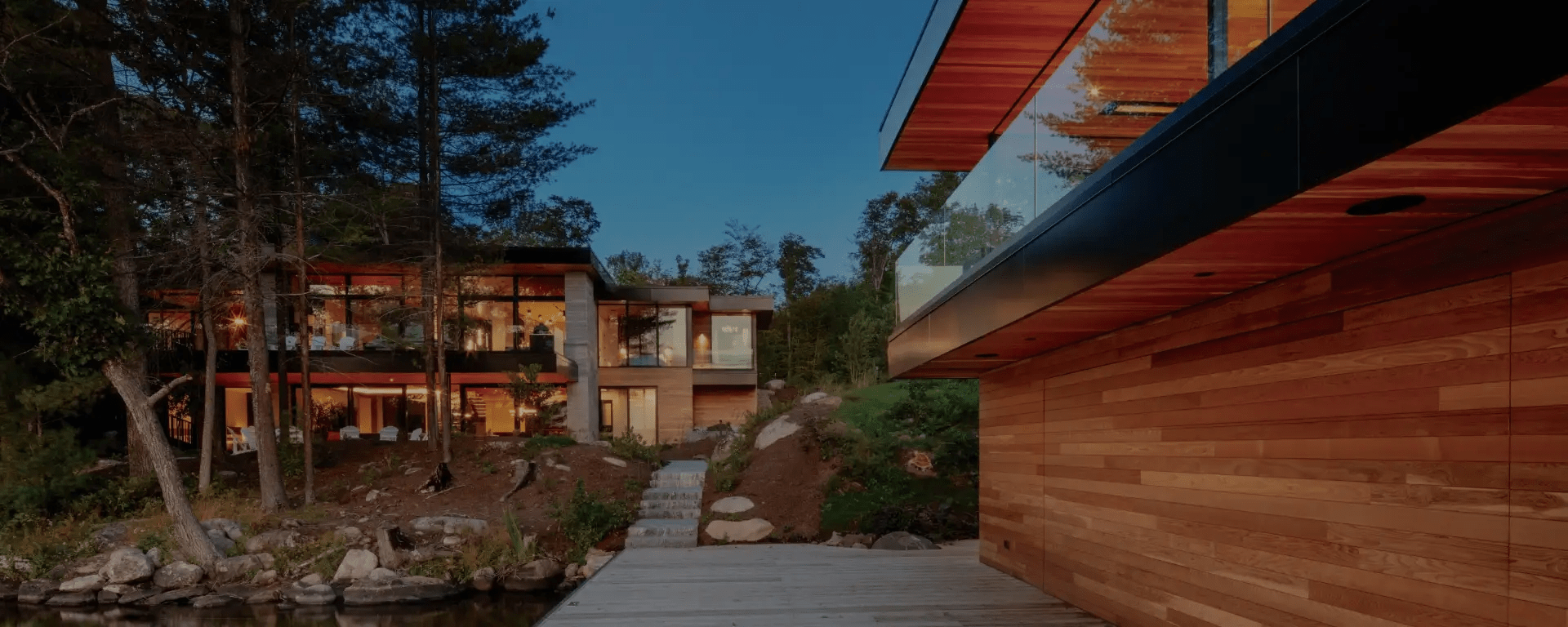

When it comes to soffit, most homeowners don’t give it much thought until they’re in the middle of a renovation or a new build and someone hands them a material choice they weren’t expecting. Real wood or wood-look? Cedar or composite? The options have multiplied in the last decade, and the marketing behind vinyl and composite alternatives has gotten good enough that the differences aren’t always obvious from a product sheet or a showroom sample.
This post breaks down what each option actually delivers — not to dismiss the alternatives, but to give you the information you need to make the right call for your specific project.
What Soffit Actually Does
Soffit is the material that covers the underside of your roof overhang — the horizontal surface you see when you look up at the eaves. It does several things at once: it closes off the gap between your exterior wall cladding and the roof edge, it protects the rafters and roof structure from weather and pests, and when specified with ventilated profiles or integrated venting strips, it allows critical airflow into the attic space to prevent ice dams and manage moisture.
Because it’s a horizontal surface exposed to the elements, the material choice affects both how the soffit looks and how it performs over the life of the building. What works in one application doesn’t always work in another, and the gap between what a material looks like on day one and what it looks like after ten Canadian winters is often where the real decision gets made.

What Wood-Look Alternatives Offer
Vinyl and composite soffit products have improved substantially in quality over the past decade. Modern wood-look soffit uses printing and embossing technology to replicate the appearance of wood grain, and at a distance or in a photograph, it can be a convincing imitation. The pitch for these products is straightforward: lower upfront cost, no painting or staining required, and a consistent appearance out of the box that doesn’t require finishing before installation.
For projects where the soffit is high up and rarely seen up close, or where the priority is a fast, low-maintenance installation with predictable cost, wood-look alternatives make a reasonable case. The trade-offs are worth understanding, though, because they tend to show up over time rather than immediately.
Printed finishes, however convincing they are in a showroom, don’t replicate the depth and variation of real wood grain at close range. The pattern typically repeats at regular intervals, which is visible once you know to look for it. Vinyl is also prone to colour fade under UV exposure over time — a panel installed today may look noticeably different from a replacement panel installed five years from now, creating a tough matching problem. Furthermore, materials like vinyl experience significant thermal expansion and contraction during Ontario freeze-thaw cycles, making them brittle in sub-zero temperatures and prone to cracking or buckling if impacted.
What Real Wood Soffit Offers
Real wood soffit — cedar and pine being the most common choices for exterior applications — brings a few things that no printed alternative can replicate. The grain pattern in real wood is unique across every board, which gives a wood soffit installation a natural variation and depth that reads as authentic rather than manufactured, even at close range. That distinction matters more in high-visibility applications — a covered porch ceiling, a low roofline, or anywhere the soffit is at eye level rather than twenty feet overhead.
Western Red Cedar and Eastern White Cedar both bring natural resistance to rot and insects from their own oils, which is part of why they’ve been used in exterior applications for generations. Pine is a stable, well-regarded substrate that, when properly primed and finished, takes paint and stain evenly — giving you full control over the finished colour with factory-applied coatings like MuskokaTone Exterior rather than being locked into whatever the manufacturer offers.
There's also a design continuity advantage that vinyl and composite simply can't match. A wood soffit allows you to carry the same species and profile from your exterior roofline through to an interior porch or covered ceiling — creating a seamless transition between inside and out that feels intentional rather than coincidental. No one is specifying aluminum or vinyl for an interior ceiling finish, and real wood soffit gives you the flexibility to blur that line in a way that elevates the whole space.
The Repairability Argument
This is where real wood makes its strongest practical case, and it’s an argument that tends to get overlooked in the initial material decision because it’s about what happens years down the road rather than on installation day.
When a wood soffit board is damaged — from a falling branch, a ladder, wildlife, or just wear over time — it can be replaced individually. You pull the damaged board, source a matching replacement from the same species and profile, and the repair is essentially invisible. The colour and texture of real wood is inherent to the material, not a surface print, so a new board of the same species will age to match the surrounding boards naturally over time.
With vinyl or composite panels, that repair is significantly more complicated. Panels are produced in runs, and the exact colour from five or ten years ago may no longer be in production — or the existing panels will have faded enough that a new panel from current stock is visibly different. In practice, a single damaged panel on a vinyl soffit installation can mean replacing an entire run to maintain a consistent appearance. That’s a cost and a hassle that rarely factors into the initial price comparison between materials.
It's also worth noting that soffit is one of the lower-maintenance wood applications on a building. Unlike decking, which takes the full force of foot traffic, UV exposure, and direct weather contact, or siding, which faces wind, rain, and freeze-thaw cycling head-on, soffit sits protected under the roofline. That position means it sees significantly less UV and weather stress than other exterior wood applications — which translates to a more forgiving maintenance profile than many homeowners expect when they hear "real wood exterior."
Muskoka Timber Mills Soffit Options
Muskoka Timber Mills carries real wood soffit in six species to suit a range of project requirements and budgets. Western Red Cedar is the most popular choice for its natural rot and insect resistance and long-term exterior performance. White Pine, Thermal Pine, and ESLP offer a clean, consistent surface at a more accessible price point, with Thermal Pine bringing added dimensional stability through its heat-modification process. Western Hemlock provides a smooth, uniform grain that takes finishes evenly and suits both natural and prefinished applications. Accoya, at the premium end of the range, is an acetylated wood engineered for exceptional stability and durability — particularly well suited to high-end or performance-driven projects where long-term dimensional movement is a concern.
All species are available in a range of profiles, grades, and MuskokaTone finish colours, with wire-brushed and smooth texture options across the lineup. Our team can work through species, profile, and finish options with you based on your specific project and exposure conditions.

A selection of Muskoka Timber Mills’ natural wood soffit options, featuring pine, cedar, and hemlock.
Which One Is Right for Your Project?
The honest answer depends on the application. Wood-look alternatives are a reasonable choice for high-up, low-visibility installations where upfront cost and installation speed are the primary drivers. For anything at eye level, on a heritage or high-end residential project, or anywhere long-term repairability and visual authenticity matter, real wood is the better investment over the life of the building.
The price difference between real wood and a quality composite narrows considerably once you account for the finishing, the long-term maintenance, and the potential cost of replacing panels to maintain colour consistency after a repair. Over a twenty or thirty year horizon, real wood often works out to the better value — not just the better-looking choice.
Contact us, visit our Bracebridge Showroom, or book a free call with one of our experts to discuss which soffit option is right for your project.